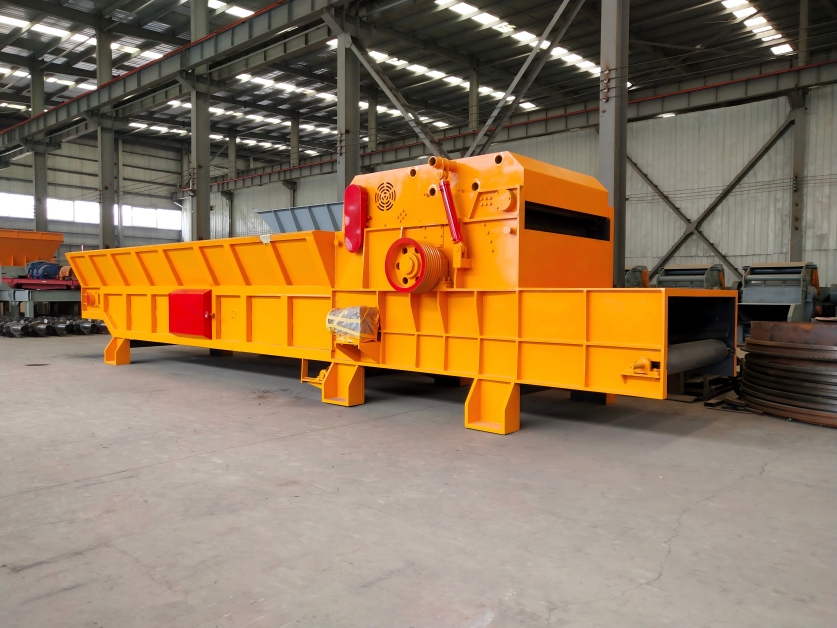
Target Keywords: Biomass fuel preparation system, hammer mill for wood logs, biomass crushing and screening line, industrial wood chipper alternative, ISO 17827-1 biomass sizing.
For utility-scale biomass power plants utilizing low-bulk-density, abrasive feedstock (such as encroacher bush or forestry residues), efficient fuel preparation is critical to boiler stability and plant economics. This reference design outlines a dual-train biomass crushing and screening solution engineered for a 40 MW power station processing up to 30.8 t/h of mixed feedstock.
Processing Capacity: 2 × 40 t/h hammer mills paired with 2 × 60 t/h rectilinear swinging screens.
Feedstock Range: Ø250 mm uncrushed raw logs (up to 2.5 m length) alongside pre-chipped wood.
Product Output Specification: 30–100 mm particle size with a 95% on-spec rate (verified via ISO 17827-1 round-hole sieve analysis).
Equipment Reliability: Designed for continuous operation in abrasive, remote environments with a complete 3-tier spare parts strategy.
Challenge: Uncrushed logs require high-impact reduction, while pre-chipped material introduces fines and oversize slabs that bypass standard shredders.
Solution: A split-path configuration where raw logs enter the heavy-duty hammer mill (utilizing spiral-arranged DC53 impact hammers), while pre-chipped material bypasses primary crushing via a double-screw feeder directly to the screening stage. Both streams converge at the final quality gate.
Challenge: Grate-fired boilers demand strict sizing . Hammer wear naturally causes particle-size drift over time.
Solution: A closed-loop screening circuit featuring a 15.5 m² rectilinear swinging screen. Oversize material is automatically rejected and returned to the crusher inlet, while fines are separated, ensuring consistent product quality independently of hammer wear lifecycle stages.
Parameter | Unit | Fines | Main Fraction | Coarse | Max Size |
Particle size | mm | < 3.15 | 3.15 < P ≤ 100 | 100 < P ≤ 350 | < 350 |
Percentage | W-% | ≤ 8 | Minimum 60 | (0–10) | 100 |
Challenge: Remote plant locations distant from major ports make unexpected component failures costly in downtime. Abrasive, grit-laden biomass accelerates wear.
Solution: High-durability alloy metallurgy (HRC 54–59 hammers guaranteed for 5,000t throughput) coupled with a comprehensive three-tier spare parts package (commissioning, 2-year critical, and strategic inventories) pre-shipped to site.
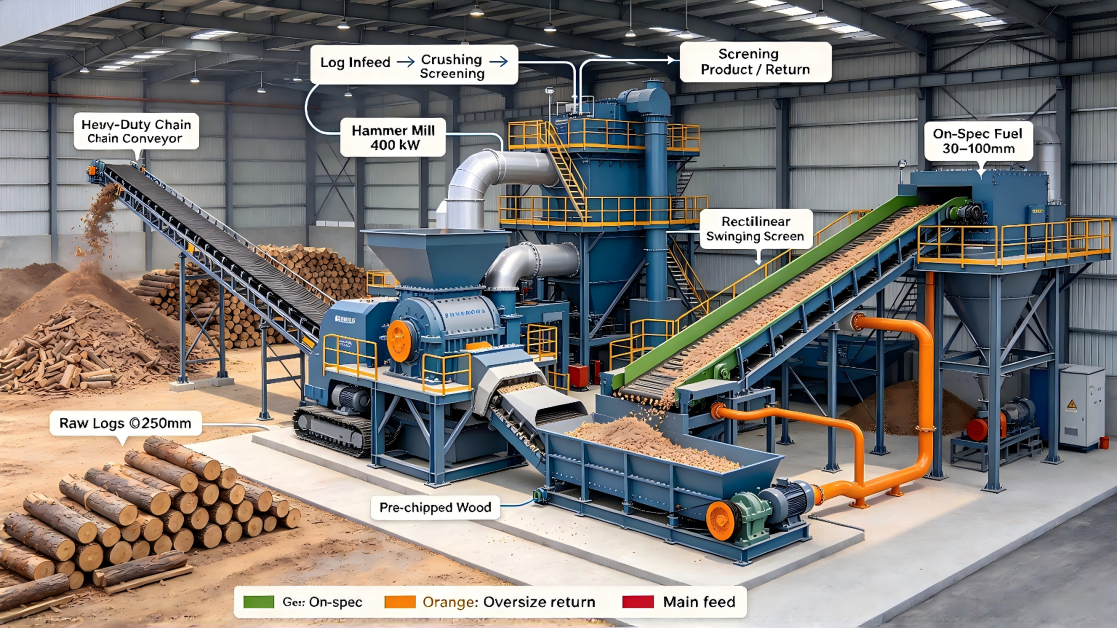
Primary Crushing: JP2000-1400 hammer mills driven by high performance motors with adjustable anvil clearances 5mm.
Screening Stage: High-capacity rectilinear swinging screens offering 50% capacity headroom to absorb moisture-related efficiency drops during wet seasons.
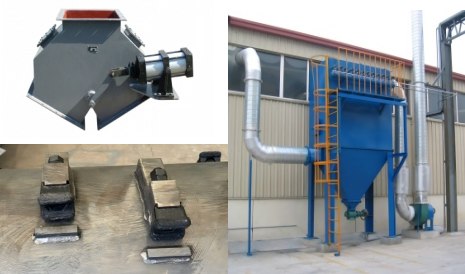
Environmental & Control: IP65 motors, pulse-jet baghouse dust collection, and full Siemens PLC integration communicating with the plant DCS via redundant hardwired and bus connections.
Before Purchase
Q1.Can one system really handle both pre-chipped wood and uncrushed raw logs, or do I need separate lines?
Yes — if the system is configured with a screening stage as the final quality gate. In this project, pre-chipped material is fed by a double-screw conveyor directly to the screen, while raw logs go through the hammer mill first; both streams converge at the same screens. Off-spec material from either stream drops to ground and returns to the crusher by loader. One shared quality gate replaces two separate processing lines — lower capex, lower spare-parts inventory, one control system.
Q2. My feedstock moisture varies a lot between dry season and wet season — will this jam the crusher or the screen?
Moisture affects both capacity and screen performance: wet, fibrous material takes more impact energy to break, and excessive fines stick to screen apertures.This is why the configuration uses a hammer mill (impact crushing, tolerant to irregular wet feed) rather than a knife chipper, and why the screening stage is sized at 60 t/h against a crusher output of 40 t/h — the 50% screening headroom absorbs capacity loss in wet conditions. For seasonal peaks, the three-way distributor lets either train bypass the other.
Q3.How do you guarantee particle size stays within 3.15–100 mm, not just on day one but after six months of hammer wear?
Through a closed-loop recirculation design, not through hammer replacement schedules. The screen continuously separates off-spec output — oversize returns to the crusher inlet, fines are extracted to a separate bin — so particle-size drift from hammer wear is corrected inside the system, not at the boiler. The 95% on-spec rate (30–100 mm) written into the performance guarantee is verified per ISO 17827-1 by round-hole sieve analysis on an as-received sample basis.
Q4.What happens if my boiler fuel spec is different from ISO 17827-1, or my feedstock is not encroacher bush?
The configuration logic transfers; the hardware parameters are re-selected. Send us your feedstock type, infeed dimensions, target particle-size distribution and boiler fuel-consumption profile — the hammer metallurgy, screen aperture, rotor speed and conveyor sizing are all selected against your actual spec, not copied from this project. If your material is dominated by high-silica or high-moisture fractions, we will flag it during the pre-contract test and adjust the configuration before quoting.
During Purchase
Q5. How can I verify the machine handles my feedstock before I sign the contract — not just the seller’s test material?
Ask for a factory acceptance test (FAT) with your own material shipped to the seller’s works. This was written into our contract: the buyer shipped 80–100 tonnes of raw encroacher bush from the project region to our factory, and we ran full pre-delivery testing on the actual feedstock, with sieve-analysis records witnessed by the buyer’s representative. Any supplier unwilling to test on your material before contract is asking you to accept performance risk they have not verified themselves.
Q6. What is a realistic delivery and commissioning timeline for an overseas project, and what does the seller actually take responsibility for?
For this scope — two crushing trains, two screening trains, dust collection and PLC control — manufacturing and delivery was contracted at 4-6 months from contract signing; commissioning support is provided by our engineers off site. We take responsibility for design, manufacturing, transport, installation guidance, commissioning guidance, spare parts and after-sales service through to performance acceptance; the buyer provides main power supply to our control panel boundary and civil foundations per our load drawings.
After Purchase
Q7. Which wear parts consume the fastest, and how much should I budget annually for them?
Hammers and anvils are the dominant wear items. On this project, hammer service life is contractually guaranteed at ≥ 5,000 tonnes of throughput per set (DC53 material, HRC 54–59), with 50 sets of 75 hammers plus 11 anvil sets delivered as 2-year critical spares. Annual wear-part cost is therefore roughly predictable per tonne processed, not an open-ended variable — ask us to calculate your specific figure against your annual fuel throughput.
Q8. Will particle size drift as hammers wear down, and do I have to stop production to fix it?
Drift is compensated by the closed-loop screening circuit, not by stopping production. Because the screen continuously rejects oversize back to the crusher and extracts fines to a separate bin, wear-driven drift is absorbed inside the system — the boiler keeps receiving on-spec fuel while wear progresses. Production stops only for scheduled hammer replacement, which follows the ≥ 5,000 t life-cycle interval planned into your spare-parts inventory.
Q9. My plant is 600 km from the nearest port — what happens if a critical part fails and I do not have it on site?
This is exactly why the contract specifies a three-tier spares package: commissioning spares (for installation and test runs), 2-year critical spares (covering the warranty period, transferred to the owner at warranty expiry), and strategic spares (for parts whose failure directly stops the plant). All three tiers shipped with the equipment. If any covered part is used during warranty, the seller must replenish it within 30 days. For plants without port access, we recommend budgeting the strategic tier at full value — it is the cheapest insurance against weeks of downtime.
Q10. Does your control system actually integrate with our plant DCS, or is it a standalone box?
It integrates at both signal levels. Our PLC (Siemens platform) connects to the plant DCS via hardwired I/O for safety-critical and critical signals, and via serial bus for status, process parameters and alarms — the main control room can start, stop and monitor the crushing and screening trains remotely. Redundant controllers, single-fault tolerance and redundant DCS communication links are all specified, so the fuel-preparation system behaves as part of the plant, not as a separate island requiring local attendance.
Planning a fuel-preparation system for a biomass power plant?
Send your feed forms (logs / chips / mixed), infeed sizes, target particle-size spec and boiler fuel-consumption profile — our engineers will return a crushing + screening configuration with capacity and size-distribution estimates within 48 hours.